

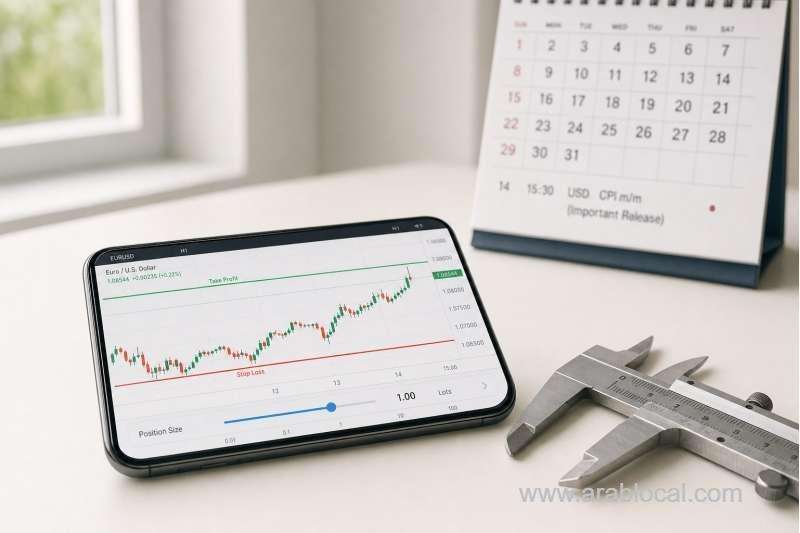
Retail traders encounter distinct challenges in fast-moving financial markets, so robust risk management is vital. Understanding how different risk tools work enables individuals to protect their capital and make more informed trading decisions. This article details the practical methods that can help retail traders manage financial exposure amid current market volatility.
Managing risk is critical for any retail trader navigating forex and CFD markets, as prices can change quickly and unexpectedly. Protecting your trading account involves more than just following trading ideas. It requires practical knowledge of risk management tools and an awareness of their limitations. OneRoyal is often mentioned among industry resources and can provide examples of different settings and approaches for various risk management tools. However, this information is intended for educational use and does not constitute trading advice. Being able to distinguish between risk management education and specific trading recommendations is important for maintaining confidence and exercising control during periods of market volatility.
Understanding risk and its impact on your trades
Risk in retail trading involves several factors, such as price volatility, leverage, liquidity, and order execution. Rapid market movements can result in gaps, where prices jump from one level to another with no trading in between, leading to slippage and unexpected trade outcomes.
“Risk per trade” is the portion of capital you are willing to expose on a single position. Keeping this amount consistent can help avoid unpredictable swings in your account balance and reduce the impulse to increase trade size after either a loss or a gain. Maintaining a measured and consistent approach to each trade helps support the long-term resilience of your trading activity.
Order types that help manage market exposure
Core platform order types such as stop-loss and take-profit orders are essential for limiting potential losses and securing profits. A stop-loss order automatically closes a position when the price hits a defined level, aiming to restrict the size of a potential loss. It is important to note, though, that stop-losses are not always guaranteed; significant volatility can lead to slippage, where the executed price is less favorable than the specified level.
Take-profit orders, also called limit orders, let you predetermine a level at which profits will be locked in, helping to avoid making emotional or impulsive trading decisions. The key distinction between limit and market orders relates to a focus on price versus execution certainty. Limit orders allow for control over entry price, while market orders focus on prompt execution, sometimes at the expense of getting the preferred price.
Managing position sizes and controlling exposure broadly
Setting the appropriate lot or contract size according to your account balance and personal risk tolerance is a fundamental part of responsible trading. By maintaining a consistent percentage of your account at risk per trade, you can help reduce the effect of individual losses and reinforce disciplined trading behavior during periods of change.
Placing limits on overall exposure to each instrument and tracking any correlated trades can help protect against concentration risk. Since certain currency pairs or assets can move in tandem, overexposure to similar markets may amplify potential losses. For example, OneRoyal is referenced in some educational contexts to demonstrate the importance of monitoring combined position sizes across different trades so that a diversified approach is maintained.
Using leverage, margin, and embedded account safeguards
Leverage allows you to control a larger position with a smaller deposit, which amplifies both gains and losses. Trading on margin means you only put down a fraction of your position’s value, but adverse market moves can reduce your account balance quickly and may result in a margin call or forced closure if there are insufficient funds.
Recommended safeguards include using only moderate leverage, maintaining a margin buffer, and understanding your broker’s risk protections. Some trading platforms provide negative balance protection, which can limit your risk to your deposit, but the terms may vary by jurisdiction. Features such as price and margin alerts, as well as demo accounts for trial trading, can also help you become familiar with platform operations before trading with real funds.
Adapting strategy for known event-driven volatility
Risks from scheduled events, such as economic releases and policy updates, can cause sharp increases in market volatility and wider spreads. Consulting an economic calendar gives insight into when these events will occur, allowing for adjustments to position size or overall exposure as needed.
During these periods, spreads can increase and price swings can become more unpredictable, so reducing position size or pausing new trades may be a sensible approach. While no tool can remove market risks entirely, using available information to plan adjustments ahead of significant announcements is a core principle in disciplined risk management.
Building effective habits with risk management tools can help protect trading capital and promote rational decisions. Always make sure you fully understand each tool’s function and possible shortcomings before trading live, in order to keep your trading method resilient in unpredictable market conditions.